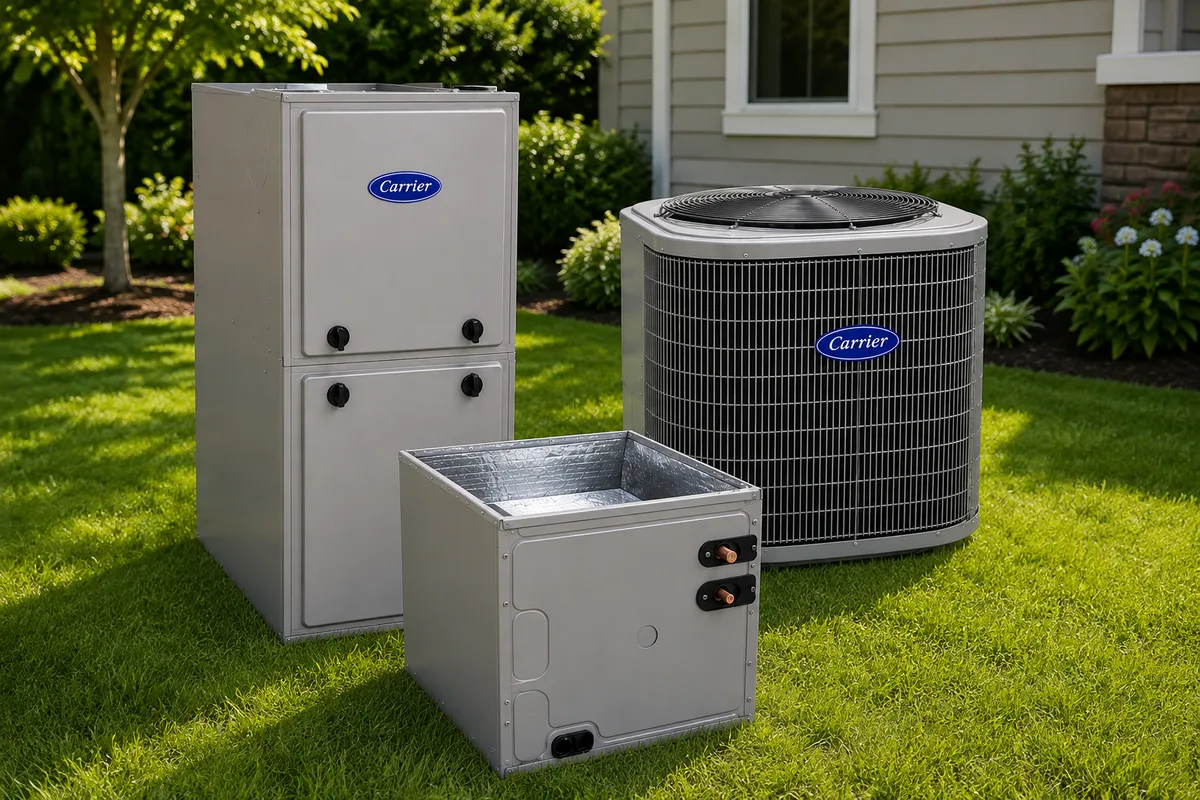
 01 · System view
 Equipment shown is an example of the system type. Final unit selection and placement follow the home assessment.
Why consider hybrid heat?
Walnut Creek’s long cooling season gives an air-source heat pump plenty of opportunity to provide efficient cooling and shoulder-season heat. Keeping a furnace can provide familiar backup during colder weather or during an electrical capacity transition.
This is a systems decision. A new heat pump connected to leaky ducts or an oversized furnace may underdeliver no matter how advanced the thermostat looks.
The changeover point is not a magic number
The balance point depends on the home’s heat loss, heat-pump capacity at outdoor temperature, gas and electric rates, comfort preferences, and the selected control logic. A qualified designer can explain what the system is expected to do at different conditions rather than presenting one universal temperature.
Questions to put in the proposal
- Which equipment provides first-stage heat, and what triggers the furnace?
- How will auxiliary or emergency heat be limited and controlled?
- Does the existing furnace have enough remaining service life to justify keeping it?
- Will the electrical panel and outdoor disconnect support the new equipment?
- What duct sealing, filter, and return-air work is included?
- Which permits, inspections, and commissioning documentation are part of the scope?
Hybrid now, all-electric later
If full electrification is a future goal, ask the installer to document what the current electrical service can support and what future work would change the answer. Choosing compatible controls and leaving a clear mechanical layout can avoid paying to undo today’s decisions. Verify current incentive rules before assigning value to a future step.